
ASD3DP
A machine. Four microphones. A new way to listen.
AcceptedDCASE 2026 Workshop
A physically recorded 3D-printer sound dataset that connects audio to machine commands, telemetry and process annotations.
A dataset that lets you follow the experiment
Four synchronized microphones captured 28.99 hours of unique machine operation over 41 sessions. The 9,067 selected ten-second clips cover normal operation, belt-tension conditions, extruder failures and toolhead collisions. Duration is not summed across channels.
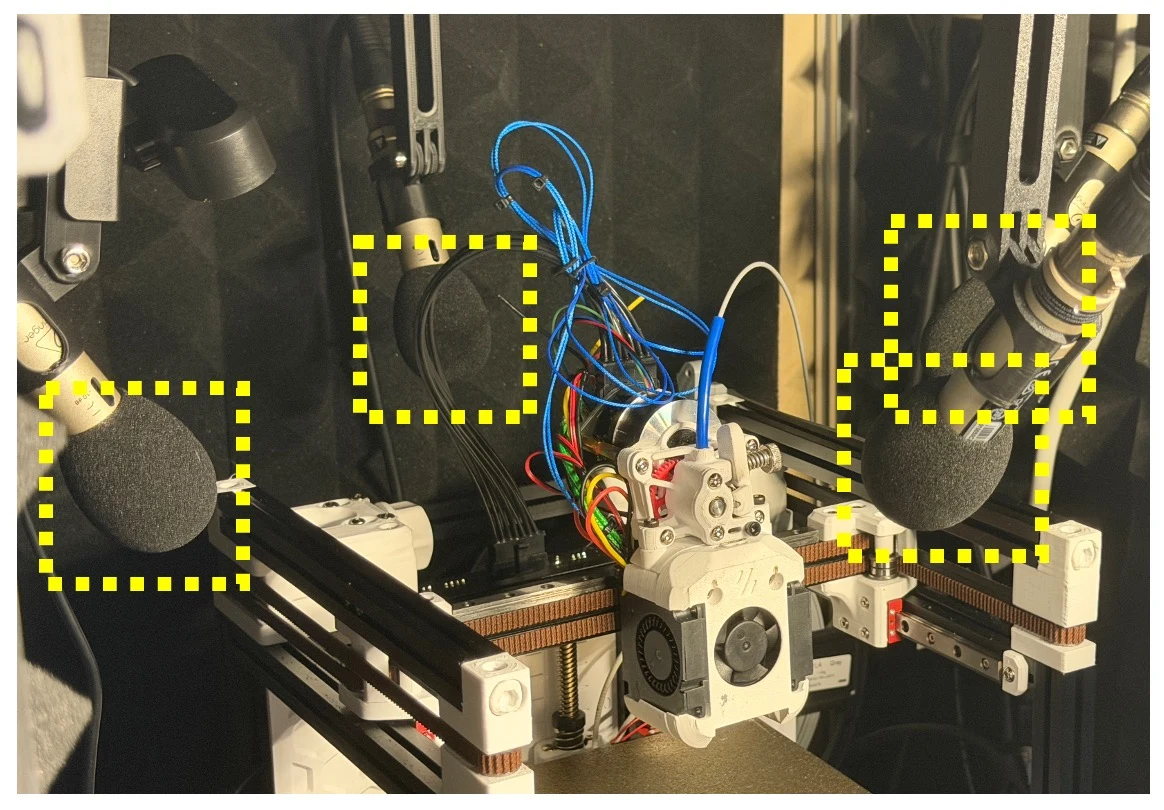
Sound and process, on a shared timeline
G-code, telemetry, process states and fault-active intervals align with the audio. Controlled protocols physically induced faults; the released sound was recorded from a real printer. Rule-derived candidate intervals remain distinct from human-reviewed events.
Reproduction and evaluation
The public repository includes baseline code, split information and annotation documentation. Split by recording session to avoid leakage between related clips. This release contains one printer build and one primary microphone geometry; it does not establish generalization to every printer or naturally developing fault.
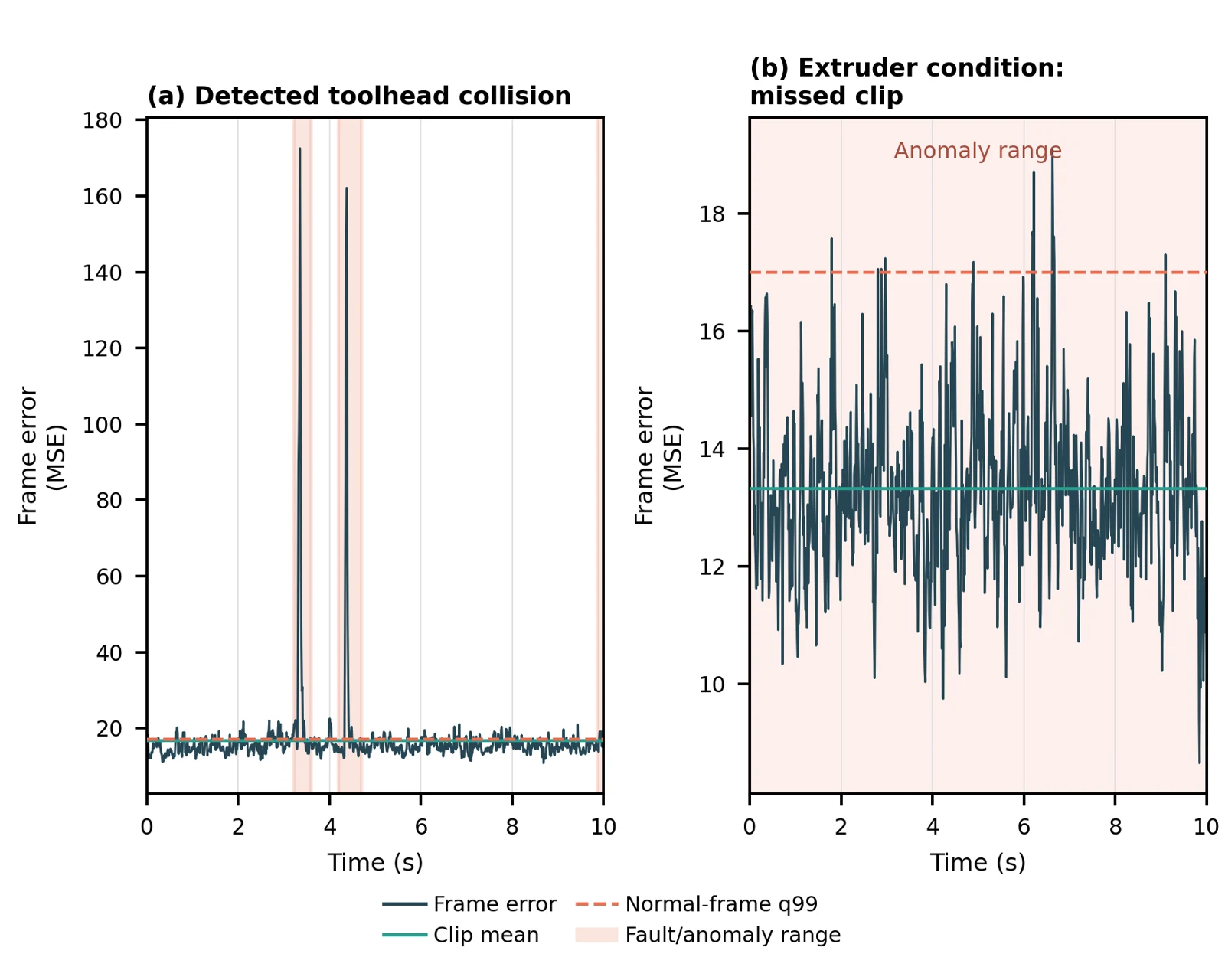
Research record
ASD3DP: A Process-Aligned Dataset for Soft and Hard Anomaly Detection in FFF 3D Printing
JeongSik Kim · JongWoo Sung · HyeonJun Bae · BoRyeon Kim · JiAn Lee
2026 · Accepted · DCASE 2026 Workshop